


Are Sets Getting Shorter?
Are DJ sets getting shorter? A case for longer sets, deeper journeys and the space to let a dancefloor build.

We know our attention spans are shrinking, but is it impacting our nights out?
You might have felt this at a day party, where you spend most of your time bickering with your mates about who to see, running between stages, the bar and toilets, and before you know it you’re on your way home, feeling like you’ve not really enjoyed the music you claim to love. You might have waited all week to see a set, but then when your favourite DJ comes on, it feels like no time has passed before their set is over and it’s moved onto someone else.
What’s happening?
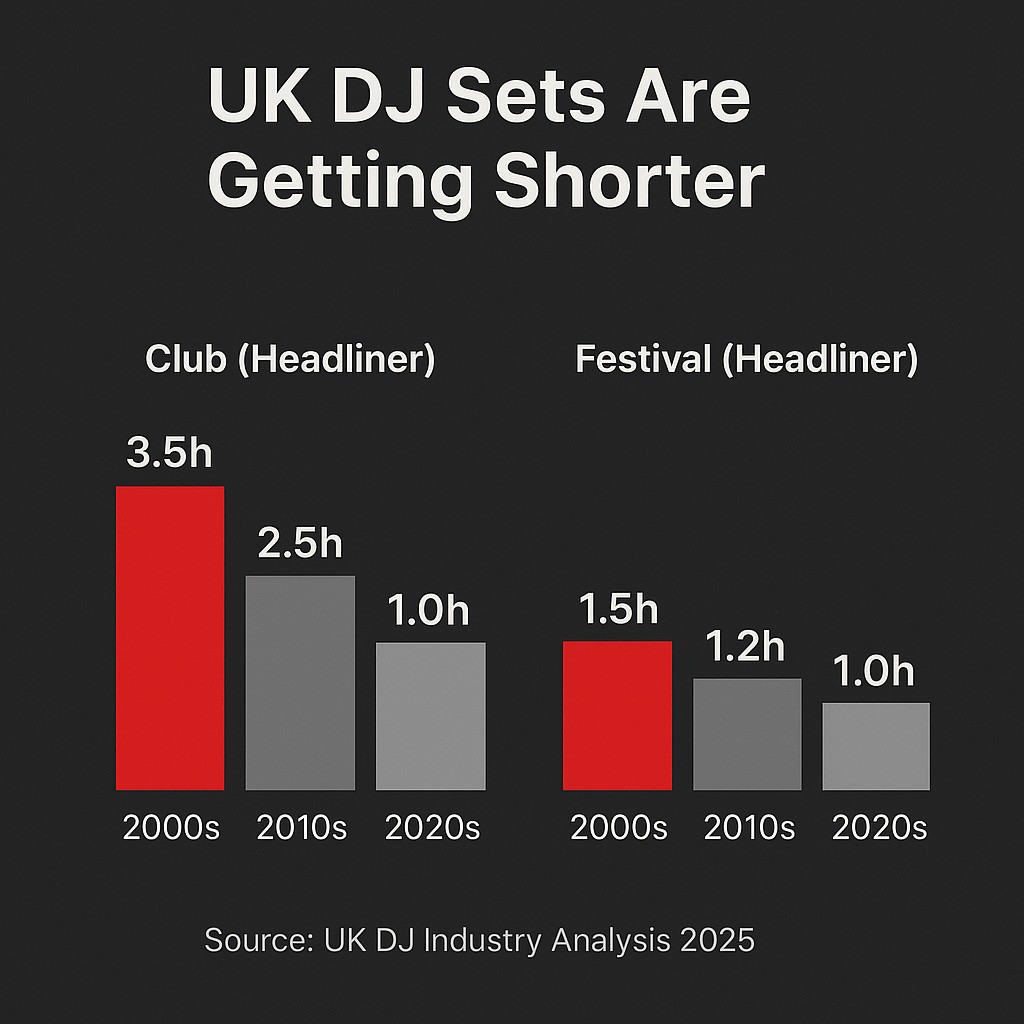
I did a little digging/scraping on a history of club headliners in the UK… and the data says: yes, you’re not crazy (or getting too old for this shiiit) – sets are increasingly shorter and quicker. As a result, some may feel isolated from the nights they used to enjoy.
During the 2000s, UK club culture was made up of marathon DJ performances. Sometimes this was taken to the extreme – John Digweed famously played from 9 pm to close (an 8-hour set) in 2002 – but the norm was extended, open-to-close club and live sets of approx. 4 hours in house/techno. Festival slots were moderate length and radio slots hosted fixed, short sets.
After running the numbers…
I found that between the 2000s and 2020s, the length of the average DJ set played at clubs in the UK has decreased 71.43%. We are witnessing the TikTok-ification of electronic music, as audiences (and therefore, promoters) favour fast, high-impact performances with immediate dance floor hits that can be shared easily online, as opposed to a slower burn. The impact can be seen in ‘classic’ club songs having a resurgence, and nights feeling faster.
Does this matter? Maybe, maybe not. But our fast-paced culture is impacting every aspect of how we create and consume music, and it’s changing the dance floor.
Why is this happening?
Since electronic music has swept into the mainstream, two factors have contributed to this shift. 1) The explosion of large-scale music events and festivals, 2) rising DJ fees (due to economic pressures). Put those two things in a money-making petri dish and you have packed in, dense lineups that feel more like a sprint than a marathon.
Clubs and festivals are playgrounds, but they’re also businesses who are struggling to survive. The logic goes like this: if each artist brings in their own fan base, the lineup will appeal to more fan bases and sell more tickets – and consumers feel like they’re getting a better deal too. So that now, extended sets have become a luxury. And while underground circles (like techno and some house genres) still prefer longer sets, it is not unusual for techno DJs to play a short set in mainstream clubs unless they’re specifically booked for an all night long slot. Then there’s the question of whether someone is a DJ or a producer, and how this changes the output and vibe too, (i.e. producer’s sets feel more like a concert, playing and mixing their released tracks, a DJ set is more about skill and curation).

Mainstream venues won’t change until we do
If the majority of people are happy, does it matter? Is it just a natural progression of how we enjoy music… or is it totally ruining the vibe? While a stacked lineup looks appealing, we’ve all found ourselves scrambling around a festival, between friend groups, stages and sets, never really settling in.
Will the industry ever slow down? It’s true that promoters are starting to recognise the impact, but with clubs and festivals feeling the pinch more than ever, it’s unlikely big mainstream clubs will change their formula unless we ask them to.
by Kelly Washington
Share this post
Related articles


© breakthewire 2026.